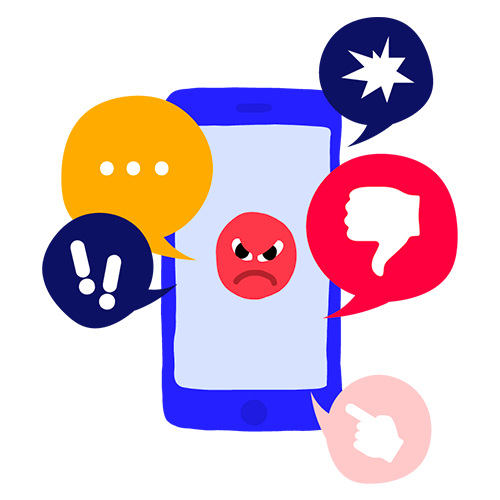
Internet: the dangers

Preventing risks and dangers on the Internet

Risks specific to the Internet

Whilst the internet is a wonderful tool, it is also the source of new forms of violence and risks.

  • The inappropriate content 

Pornographic videos and photos, extremely violent content or comments, sale of drugs or weapons, sites offering illegal downloads, online betting, etc. Much content and many websites are not suitable for children. For more information on online gambling and ways to protect minors: pasdujeu.fr

One statistic: over 82% of minors have already been exposed to pornographic content online...

  • The excessive screen time

It can lead to physical and psychological consequences, such as sleep disorders, weight gain due to a sedentary lifestyle, episodes of aggression, or even dropping out of school. 

  • The bad online encounters 

Emails, instant messaging and social networks are extremely convenient ways to communicate with friends and family. But they also open the door to people with dangerous intentions. Young people with a Skype account or public Facebook profile are exposed to contact with strangers who would not otherwise be able to approach them in everyday life.

The methods employed by paedophiles often involve insidious approaches, with long periods of dialogue via instant messaging in order to create a climate of trust (this is referred to as grooming). confidence building, or from grooming). 

  • The online videos or blogs

It is often possible to find online videos aimed at teenagers promoting dangerous physical feats. Or advice on potentially dangerous diets in trendy blogs, or even encouragement to post compromising photos of oneself... A young person without the necessary perspective may take a video of insults between famous rappers at face value and seek to imitate them, or starve themselves to follow an unrealistic beauty trend. It is important to keep your distance and not always be inspired by what is often a «bad example».

  • The online propaganda 

The internet has become the communication tool of choice around the world, and this international reach, combined with the impossibility of monitoring all communications, has made it a tool of choice for extremists seeking to recruit members. 

It is not always easy to discern when hateful content posted on the Internet crosses the line from offensive to outright illegal. Similarly, the line between freedom of expression and hate speech is often blurred. And a hateful comment that is legal in one country may be considered illegal in countries with stricter criteria.

The main dangers of the internet:
– Cyberbullying
– Cyberpredator
– Cybercrime
– Cyber addiction
– Exposure to inappropriate sites
– Misinformation or fake news
– Exposure to violent or hateful content
– Attempted fraud


How to prevent risks on the Internet: 14 best practices

To best protect your child, the best way is to discuss with them the risks of the internet in order to raise awareness. The idea is not to frighten him, but to give him the keys so that they can use digital tools in the most secure and responsible manner possible. 

Beyond these conversations with your child, you can adopt the good habits to prevent risks on the Internet such as:

  • The’assist with navigation on the Internet; ;
  • Stimulate your creativity by directing them to the right websites to visit; ;
  • Activate the parental control on different devices; ;
  • Establish together the rules and limits use; ;
  • Avoid installing a computer in your bedroom.e; ;
  • Make him aware of the weight of his words and actions on the Internet. He must not participate in the harassment of others; ;
  • Encourage them to stay suspicious, because you never know who might be hiding behind a pseudonym.

These are the main tips provided by INSAFE.

And more generally, the whole family should:

  • Limit the disclosure of personal information to what is strictly necessary; ;
  • Choose identifiers which do not include first names or surnames; ;
  • Create complex passwords and do not use the same one on all websites; ;
  • Change regularly change your passwords. Some applications make it easy to manage them; ;
  • Configure the privacy settings ;
  • Install software antivirus and firewall ;
  • Do not download on illegal websites.

What should you do if your child has been exposed to a risk on the Internet?

Despite your best efforts, your child may have been the victim of bullying, scammed, or exposed to inappropriate content. It is important to remind them that they can talk to you or another trusted adult about it. The important thing is to listen to it so that he can express his emotions. Above all, do not make him feel guilty.

Then, depending on the situation, you can file a complaint or report the accounts on social media. Have a question? Need advice or help taking action? Please do not hesitate to contact 3018..

To go further

Parental control

Cyberbullying

Overexposure to screens

Social media

Reporting procedures

Delisting forms

FAQ for parents

FAQ children/teenagers

Need assistance?

Bullying, cyberbullying, revenge porn, webcam blackmail, identity theft, gender-based and sexual violence, exposure to violent and pornographic content, etc., and all issues related to usage (video games, parental controls, account settings, overexposure to screens).

Let us work together to combat online harassment and violence!